

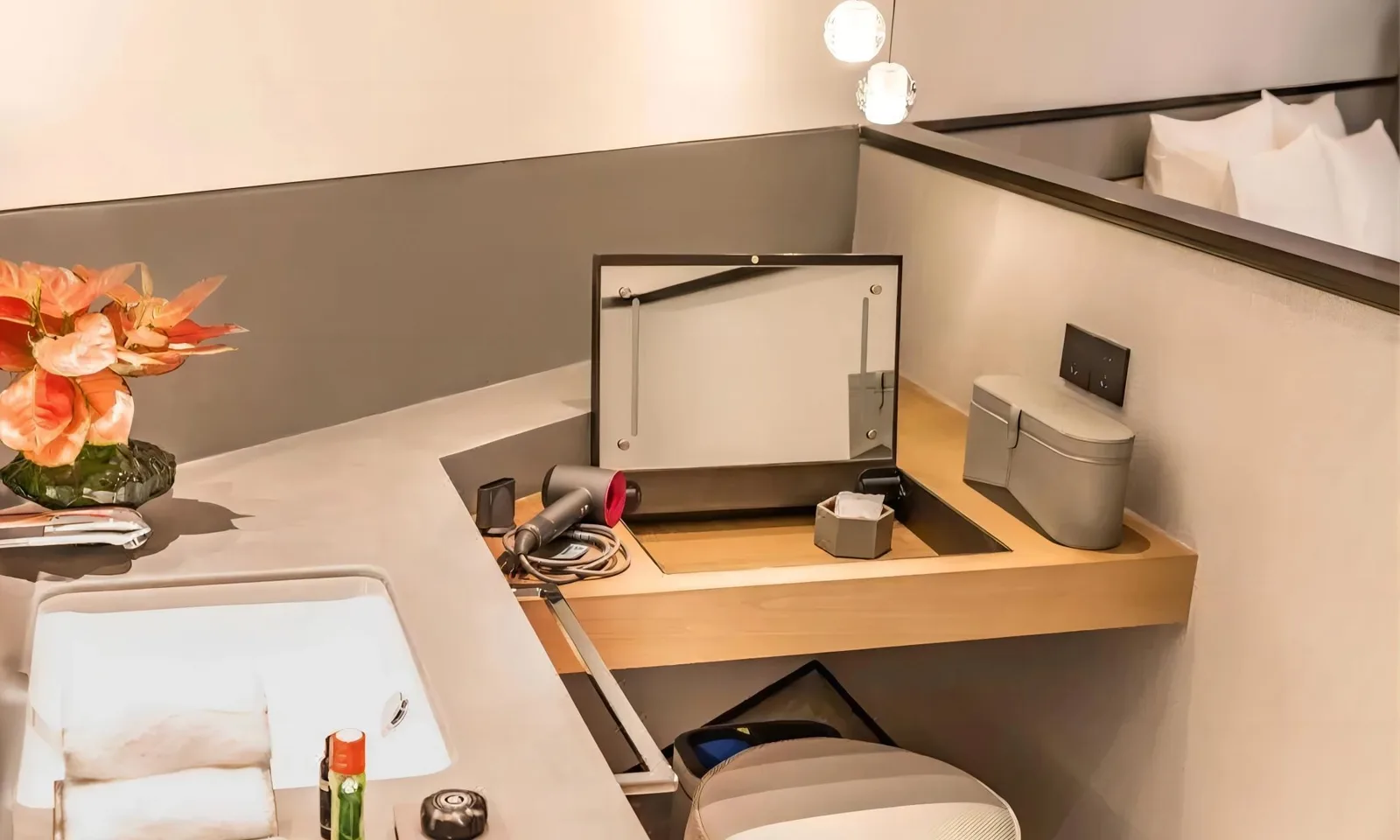
Hotel casegoods generally refers to the hard furniture used for storage, work surfaces and related functions in guestrooms. Wardrobes, bedside tables, desks and media cabinets are familiar examples. The package can also include headboards, panels or fitted pieces, depending on how the project divides its scope.
The name helps organize a purchase, but it does not define a material, quality level or complete supply responsibility. Before comparing products, identify what each item contains and how it will be used.
This is a buyer's guide to evaluating a casegoods package. It is not a technical specification or a catalogue of products confirmed for every Grandmeca project.
What is included in a hotel casegoods package?
Use the project schedule to establish the actual list. These examples show the questions that sit behind common item names.
| Item | What to identify before requesting a price |
|---|---|
| Bedside table | Overall dimensions, open or drawer storage, top finish and hardware |
| Wardrobe | Internal arrangement, door configuration, accessories and installation responsibility |
| Desk or work surface | Dimensions, supporting structure and coordination with power or other equipment |
| Luggage bench | Intended configuration, finish and whether any upholstered portion is included |
| Media or minibar cabinet | Storage arrangement, equipment information and access requirements |
| Headboard or wall panel | Overall assembly, attached elements, finish and fixing responsibility |
A headboard may combine a hard structure with upholstered panels. In that case, specify the complete assembly and identify who provides each part. Calling it casegoods does not mean its upholstery requirements can be omitted.
Check the relationship with loose seating and custom joinery. Some fitted cabinets can appear in either a casegoods schedule or a joinery package. The practical question is whether the item is assigned once, with no gap or duplicate order.
Look beyond the finish name
Two items can have a similar visible finish while using different materials or construction underneath. Ask for the proposed build-up instead of relying on a photograph or a description such as "premium wood."
For panel-based furniture, ask which material forms the body and what is used on each visible surface. Wood veneer, laminate, painted finishes and solid-wood components are possible specification choices; they are not interchangeable descriptions of one product.
Identify the treatment of exposed edges, corners and joints. If the top differs from the sides or interior, the specification should show that. A single finish reference should not hide several undecided surfaces.
The point is not to declare one material best for every hotel. Compare the proposed construction with the project's use, appearance, maintenance and evidence requirements.
Turn material choices into questions suppliers can answer
| Part of the item | Ask the supplier | Useful review evidence |
|---|---|---|
| Body and structure | What materials and construction are proposed? | Item specification and relevant drawing |
| Visible surfaces | Which product or finish reference applies to each surface? | Labelled sample and finish schedule |
| Edges and junctions | How are the exposed edges and transitions detailed? | Drawing detail or representative sample |
| Doors and drawers | What arrangement and hardware are included? | Hardware reference and sample review where required |
| Mixed materials | Who coordinates the connections between different parts? | Complete assembly information |
| Maintenance | What cleaning and care instructions apply to the proposed finish? | Product-specific care guidance |
These are requests for information, not proof that a product meets the project requirements. The appointed reviewer still needs to evaluate the documents and samples.
Where a performance requirement matters, define it with the responsible technical team and ask for relevant evidence. Do not treat an unsupported label such as "commercial grade," "fire resistant" or "moisture resistant" as a complete acceptance criterion.
Check how the furniture will be used and maintained
Discuss the intended use with the operator and design team. A desk, luggage bench and wardrobe serve different purposes, so their review should address the features that matter for each item.
Ask the supplier for cleaning and care guidance for the specified surfaces. Confirm that the operator can work with those instructions. A finish that looks right in a sample still needs to suit the project's maintenance arrangements.
For moving parts, review the proposed operation rather than the hardware name alone. Confirm door and drawer access in the intended layout. Ask how the project will identify replacement components if that information is part of the agreed handover.
Keep the questions tied to the selected item. A supplier's general brochure may not describe the exact finish or hardware proposed in your quotation.
Resolve room interfaces before approving production
Review casegoods alongside the room layout and adjacent equipment. A cabinet may match its own drawing and still need further coordination with the information supplied by another party.
For a minibar cabinet, identify the selected appliance and the requirements provided by the relevant technical parties. For a headboard, establish the position of adjacent fittings and who supplies or installs them. Avoid approving those interfaces from an attractive rendering alone.
Where site dimensions matter, name the person responsible for checking them. Record which dimensions are confirmed and which remain provisional. The drawing should not silently transfer that responsibility to someone who has not accepted it.
Compare the package, not a showroom photograph
When reviewing competing hotel furniture proposals, compare quantities, construction, materials, finish references, hardware, packaging and delivery scope. Identify exclusions and proposed substitutions.
Use the same document revision for each enquiry. A lower quote based on a different cabinet interior or unspecified hardware needs clarification before it can be compared fairly.
Agree which samples the project needs and what the reviewer will assess. Preserve the approved sample reference and drawing version so the production team has a defined basis for the order.
A useful review set contains the current furniture list, item specifications, relevant drawings, labelled samples where required and a record of open questions. None of those documents should be presented as approved until the authorized person has accepted them.
Common questions
Are casegoods always made from solid wood?
No. A casegoods package can involve different materials, surface finishes and construction methods. Ask for the specification of the proposed item rather than assuming a material from the category name.
Are casegoods and joinery the same thing?
The scopes can overlap, especially for fitted furniture. Agree which package covers each item, who provides the drawings and who handles installation. The label alone does not allocate responsibility.
Can a headboard with upholstery be part of casegoods?
It can be included in the package. Define the whole assembly and its upholstered components so neither pricing nor approval overlooks part of the item.
Prepare your casegoods enquiry
Send Grandmeca your room types, casegoods list, drawings and available material or finish references. State the project location and target delivery milestone, and mark any items whose scope or dimensions remain open.


