

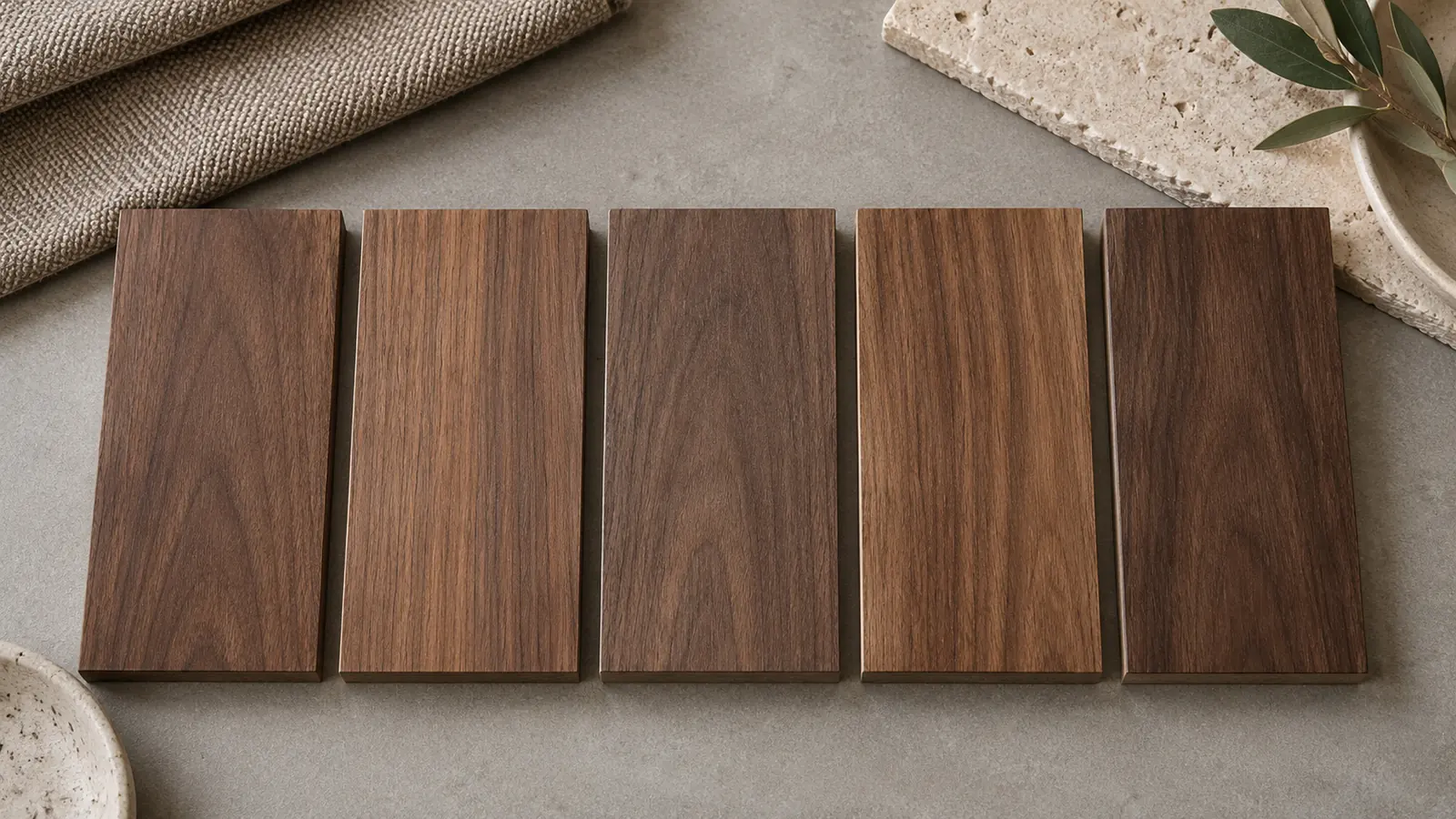
Control hotel furniture finish consistency by approving physical references, defining acceptable variation and linking production items to those references. Review colour, grain and sheen under agreed conditions. A finish name or a single photograph leaves too much undecided when several items need to work together in a room.
For natural wood veneer, discuss the expected variation instead of asking for an undefined promise of identical panels. For manufactured decorative surfaces, identify the exact product and assess how its appearance works beside the other selected materials. The approval should describe the result the project will accept.
Decide what is supposed to match
Separate a matching requirement from a coordinated palette. A bedside table and desk may need a close visual relationship, while a headboard is intentionally different. Mark these groups on the finish schedule so the manufacturer knows which comparisons matter.
Identify the material on each component. A finish description may cover veneer, solid timber, a laminate surface or painted material, but using one colour name does not make those constructions visually identical. Review the proposed combination physically where the relationship matters.
The hotel casegoods guide can help organise the items. Add the finish group and visible surfaces to each item code rather than leaving the finish as a room-wide note.
Approve more than a colour label
Record the sample ID, material, intended application and approval status. Include the agreed grain direction, sheen and edge treatment where relevant. If a sample only demonstrates colour, state that limit; do not let it become an approval of construction or durability by default.
The AWI manufacturer submittal requirements include provisions for finish samples, veneer species and cut, and panel or room matching. Treat this as a useful reference when defining project samples, not a claim that every hotel furniture contract follows AWI.
Agree who holds the reference samples. Where the buyer, designer and manufacturer each retain one, check that the references represent the same approval. Label and store them so they can be retrieved without relying on a person's memory of the review.
Define an acceptable range when variation matters
A single attractive sample does not explain which differences are acceptable across a batch. Ask the supplier to show a representative proposed range for the selected material and finish. The project reviewer should approve or reject that range before it becomes the production reference.
Avoid vague acceptance language such as "natural variation allowed" without a visual or written boundary. Discuss the features that matter to the design: colour relationship, grain character, direction and the appearance of adjacent panels. A project may accept variation across separate rooms while requiring a closer relationship within one assembled item.
Approval record | What to identify | Why the distinction matters |
|---|---|---|
Main finish sample | Material, finish and sample ID | Establishes the agreed reference |
Range samples | Accepted visual variation | Shows what the single main sample cannot |
Grain arrangement | Direction and relationship between visible panels | Clarifies the intended appearance of an assembly |
Sheen and texture | Approved physical appearance | Prevents colour alone from defining the finish |
Matching group | Item codes reviewed together | Shows where the project expects visual coordination |
Exceptions | Specific item, surface and approved difference | Keeps a limited approval from spreading to the whole order |
These records support a project-specific judgement. They do not create a universal colour tolerance. If instrumental colour measurement is required, the responsible parties should agree the method, conditions and acceptance criteria rather than borrowing a number from an unrelated product.
Review the finish under agreed conditions
Choose the viewing conditions with the designer and supplier before the approval. Include the lighting relevant to the intended room where practical, and agree how later comparisons will be made. Keep the comparison consistent enough for reviewers to discuss the same appearance.
Place related materials together. A finish sample reviewed alone may not answer whether the cabinet works beside the selected wall covering, upholstery or top. Record which adjacent materials were present and which remained provisional.
Use photographs as a record of the review, with sample IDs visible. Do not treat a screen image as an exact substitute for a physical colour and sheen comparison. Where people must review remotely, agree a method and note which decisions still require physical confirmation.
Check a representative assembly before the batch decision
For an illustrative example, consider a wardrobe with adjacent veneer doors and a separate side panel. Each small sample may be acceptable, yet the assembled combination could reveal a grain relationship the designer did not intend. Review the relevant panel arrangement before approving the production appearance.
Record any change on the drawing or finish schedule, including the affected item codes. If the approval applies only to one assembly, say so. A general comment such as "finish approved" can be misread as acceptance of every related material.
Use the hotel mock-up room approval process to examine the finish in the room. Keep the resulting decision connected to the retained samples and current item information.
Preserve the reference through production and replacement
Ask the supplier how it will identify the approved finish within the order and keep related items traceable. Agree which production checks and evidence the project requires. These arrangements need confirmation for the actual order; a general article cannot establish a manufacturer's internal inspection process.
When a difference is reported, identify the affected items and compare them with the agreed references. Separate an observed difference from a decision about acceptance. Record any approved concession, correction or replacement so later reviewers do not have to reopen the same discussion.
For future replacement orders, retain item drawings and finish references with the hotel's records. Ask for a new comparison when needed rather than assuming an old finish code guarantees an exact match to furniture already in service.
Can a photograph serve as the only finish approval
It can document a decision, but it does not reliably settle physical colour, texture and sheen. Agree physical references or another defined approval method with the responsible parties.
Should natural wood panels look identical
Do not assume that outcome from a material name. Review the proposed material and panel arrangement, then define the variation the project accepts. A requirement for a very uniform appearance should be discussed during material selection.
Share the finish schedule and matching priorities with Grandmeca to discuss the samples needed for your project. Identify the items that must be reviewed together and who will approve the physical references.
By Grandmeca


