

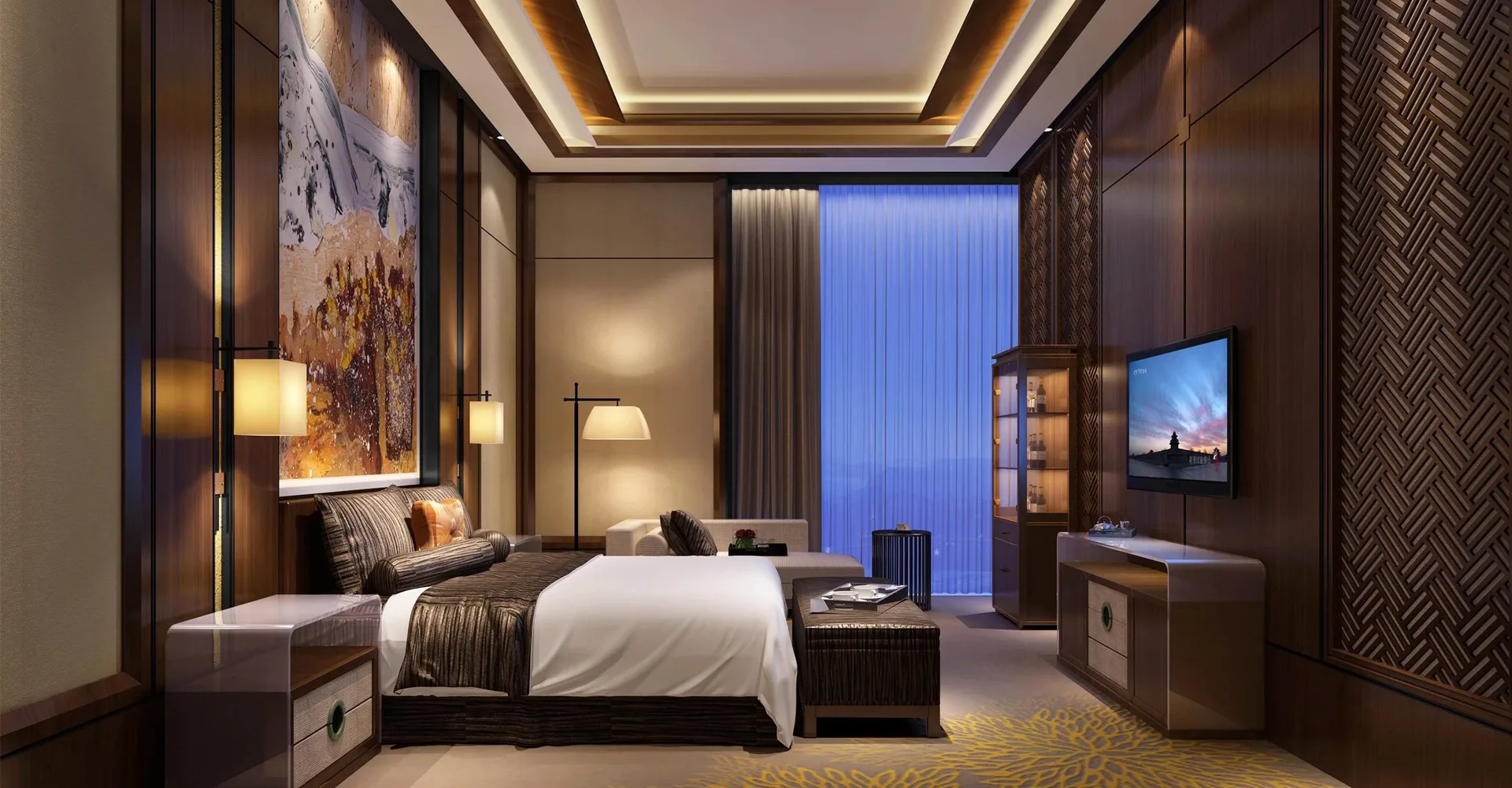
A hotel mock-up room is a full-scale room or suite model used to review the proposed design before wider execution. For furniture procurement, it gives the project team a place to assess items together, rather than approving each one only from separate images or samples.
The review needs a defined scope. Agree which furniture and interfaces the mock-up represents, who can approve them and what conditions must be met before the relevant items enter production. A room that has been viewed is not necessarily a room that has been approved.
This checklist covers furniture review. It does not replace the wider building, services or regulatory checks required for the project.
Decide what kind of sample the project needs
A finish sample, a furniture prototype and a complete mock-up room answer different questions.
| Review format | What it can help the team assess | What remains to be defined |
|---|---|---|
| Material or finish sample | Proposed colour, texture and surface appearance | The full furniture construction and its room context |
| Individual furniture sample | The agreed details and operation of that item | Its relationship with other items and the room |
| Mock-up room | The arrangement and coordination of the represented room contents | Any excluded work, unrepresented room variants or unresolved site conditions |
Use the format required by the project rather than assuming every purchase needs a complete mock-up room. If some furniture is represented by temporary substitutes, label it. Reviewers should know which pieces can be approved and which are there only to indicate position.
Prepare the review pack before the meeting
Bring the current furniture list, drawings, specifications and sample references. Identify the exact room type and any differences from the rooms planned for production.
A reviewer should be able to connect each visible item to its reference in the documents. Label samples and finishes so the approval record can identify what was actually inspected.
Name the reviewers and their authority. The designer may address appearance, the operator may address use and maintenance, and another authorized person may control production release. Use the project's actual approval arrangement; do not assume everyone attending the meeting can approve every issue.
Decide how comments will be recorded and when unresolved points will return for review. That is more useful than collecting several unconnected lists after the meeting.
Furniture checks during a mock-up room review
The following table is a review aid, not a universal inspection standard.
| Check | What to examine | What to record |
|---|---|---|
| Identity and completeness | Item references, quantities and any temporary substitutes | What is represented, missing or different |
| Dimensions and placement | Furniture against the approved layout and relevant dimensions | The item, location and specific difference |
| Adjacent items | Doors, drawers, nearby furniture and equipment interfaces | Conflicts or information still needed |
| Finishes and appearance | The actual finish against the labelled reference | Accepted reference or required change |
| Hardware and operation | Agreed functions of doors, drawers and fittings | The operation reviewed and any issue |
| Use and maintenance | Operator comments on access, cleaning and intended use | Questions for the responsible party |
| Assembly and installation scope | Connections and fixing responsibilities shown in the project information | Outstanding details and their owner |
| Documentation | Agreement between the reviewed item and its drawing or specification | Revisions needed before release |
If an acceptance requirement has not been defined, record that gap rather than inventing a test or deciding that an item has passed by default.
Review the room as a set of connected items
A wardrobe door needs to be reviewed in its intended position, with the neighbouring furniture and relevant room information. A desk or headboard may also depend on details supplied by another trade.
For custom joinery, identify which interfaces the mock-up actually represents and which still require site confirmation. Approval of the sample does not automatically confirm every installation condition elsewhere in the building.
Use the project requirements for access, clearances and any applicable performance checks. Refer unresolved technical questions to the responsible reviewer instead of treating a visual walkthrough as a substitute for technical approval.
Photographs can support the record, but identify the item, view and issue. Room photographs without labels make it difficult to tell which detail a later comment refers to.
Record decisions that production can use
Each issue needs an item reference, a clear description, supporting evidence, an owner, the agreed action and a status. Use the project-approved decision terms consistently.
For example, a bedside table handle may be accepted while the finish remains subject to revision. Record those as separate decisions. A general comment that the table is approved could otherwise conceal the outstanding finish requirement.
Where approval is conditional, identify the condition and whether it prevents production release. Name the person who can confirm that it has been satisfied. An unresolved issue should not disappear because a meeting has ended.
This is an illustrative record structure:
| Record field | Information needed |
|---|---|
| Issue and item reference | The specific problem and furniture item |
| Evidence | Labelled photograph, marked drawing or sample reference |
| Required action | The change or clarification that was agreed |
| Responsible party | Who will provide the response or correction |
| Review status | Open, resubmitted or accepted, using the project's terms |
| Release decision | What may proceed, any conditions and the authorized approver |
Turn the approved room into controlled information
After the review, update the relevant drawings and specifications. Keep the approved sample references and record how each accepted change affects the furniture scheduled for production.
Confirm which room types the approval covers. A sample for one room layout should not silently approve a different layout or furniture version.
Before releasing an affected package, resolve the conditions required by the project's approval procedure. Where an exception is authorized, record its limits and the remaining action. The manufacturing team should receive a clear document set, not a mixture of old drawings and meeting comments.
If the design changes later, return the affected points to the appropriate reviewers. The existence of an earlier mock-up approval does not settle a new specification.
Common questions
Does every hotel project need a complete mock-up room?
The sampling and approval scope should be agreed for the project. Some decisions may be reviewed through material samples or individual prototypes; others need the room context. Define the required evidence before committing to the review format.
Can a mock-up away from the final site be useful?
It can support review of the items and conditions it represents. Identify the differences and record what still needs verification at the final site. Do not treat the off-site review as confirmation of unrepresented site conditions.
Can production start with open comments?
Follow the project's release rules. Identify which comments prevent manufacture of the affected items and who can authorize any exception. A conditional approval needs a written condition, owner and release decision.
Define the sample scope before ordering it
Share the room type, furniture list, drawings and expected approval process with Grandmeca. Mark which items need samples, which interfaces need coordination and the decisions the review is intended to support.


