

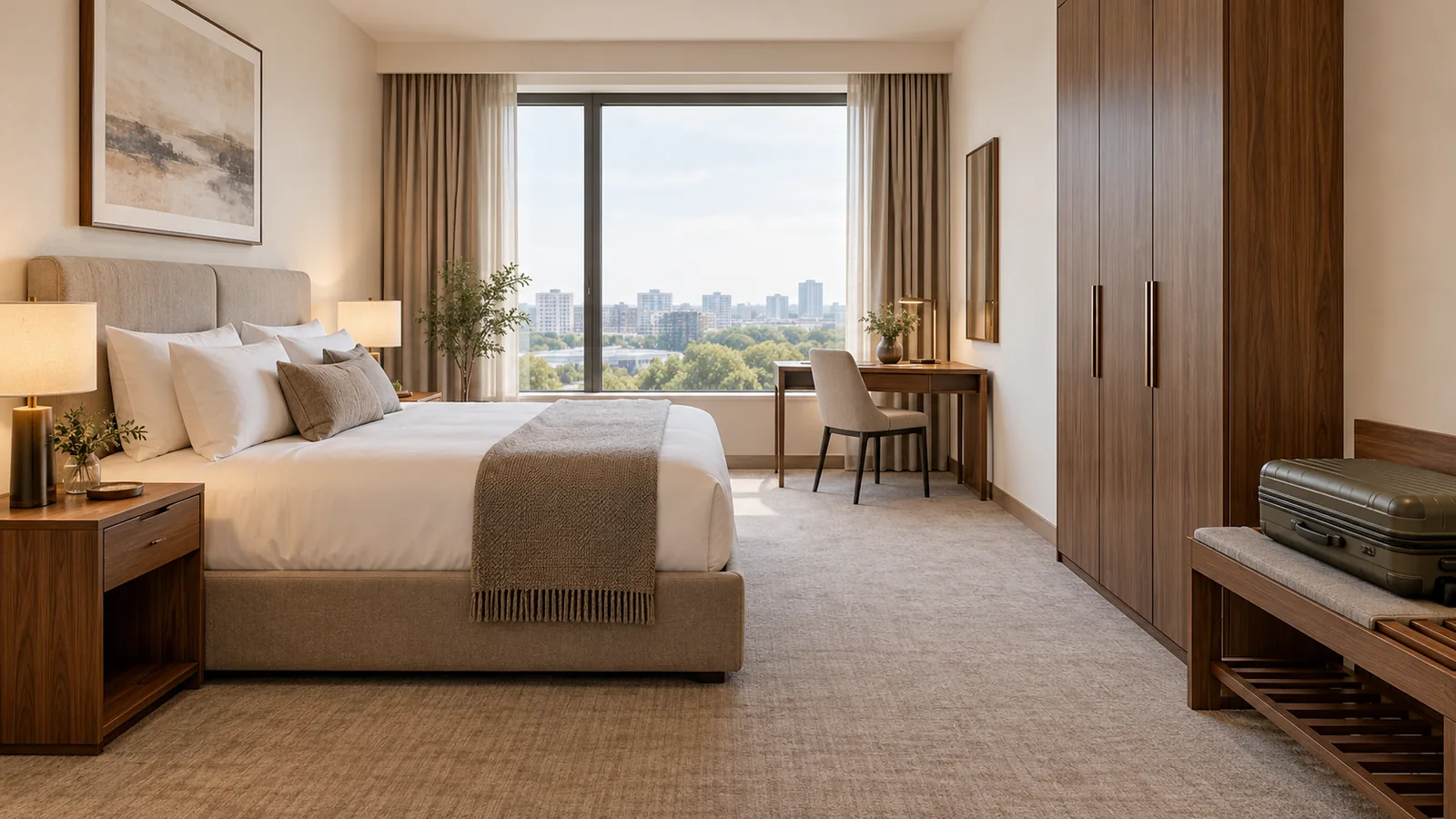
Choose hotel guestroom furniture around the activities your guests need to carry out, then check its appearance and upkeep as a complete room. Furniture should make it comfortable to sleep, sit and use the space without creating awkward routes or unnecessary work for hotel staff.
A room photograph can help establish the look you want. It cannot tell you whether a chair works at the desk, whether a suitcase fits beside the wardrobe or how easily housekeeping can clean around the bed. Those questions need a layout review and, where possible, a physical trial.
The aim is a room where the furniture earns its place. A smaller selection that supports the stay can be more useful than a crowded collection of attractive pieces.
Start with how your guests use the room
Use the hotel's guest profile and feedback to define the furniture brief. A room intended for short business stays may need a usable work surface. A room sold for longer stays may need more storage. Family accommodation should be reviewed for the number of people and belongings it is expected to hold.
Treat these as questions to test against your own property. They are not fixed rules for each hotel category. Talk to the operations team about the requests guests make and the workarounds staff see.
Write the activities down before selecting products. Where will someone place a bag on arrival? Can a guest sit to put on shoes? Is there somewhere to set a drink without using the floor? If a piece has no clear purpose, reconsider whether it belongs in the room.
The hotel FF&E checklist helps record the scope. Use it to capture the items your room needs, rather than as a reason to include every possible piece of furniture.
Choose a consistent style without making every piece identical
Give the room a clear visual direction through a limited set of finishes, colours and shapes. Decide which pieces should draw attention and which should sit quietly in the background. A distinctive headboard, for example, may allow the bedside tables and desk to stay simple.
Review furniture alongside flooring, curtains and the proposed lighting. A finish that looks suitable in isolation may feel quite different when it occupies a large area of the room. Ask to see physical samples together before approving the palette.
Consistency does not require a matching set. Different pieces can work together when their proportions and finishes have been considered. For a renovation, include photographs and samples of retained items so that the new selection responds to the room you will actually have.
Check the layout while the furniture is in use
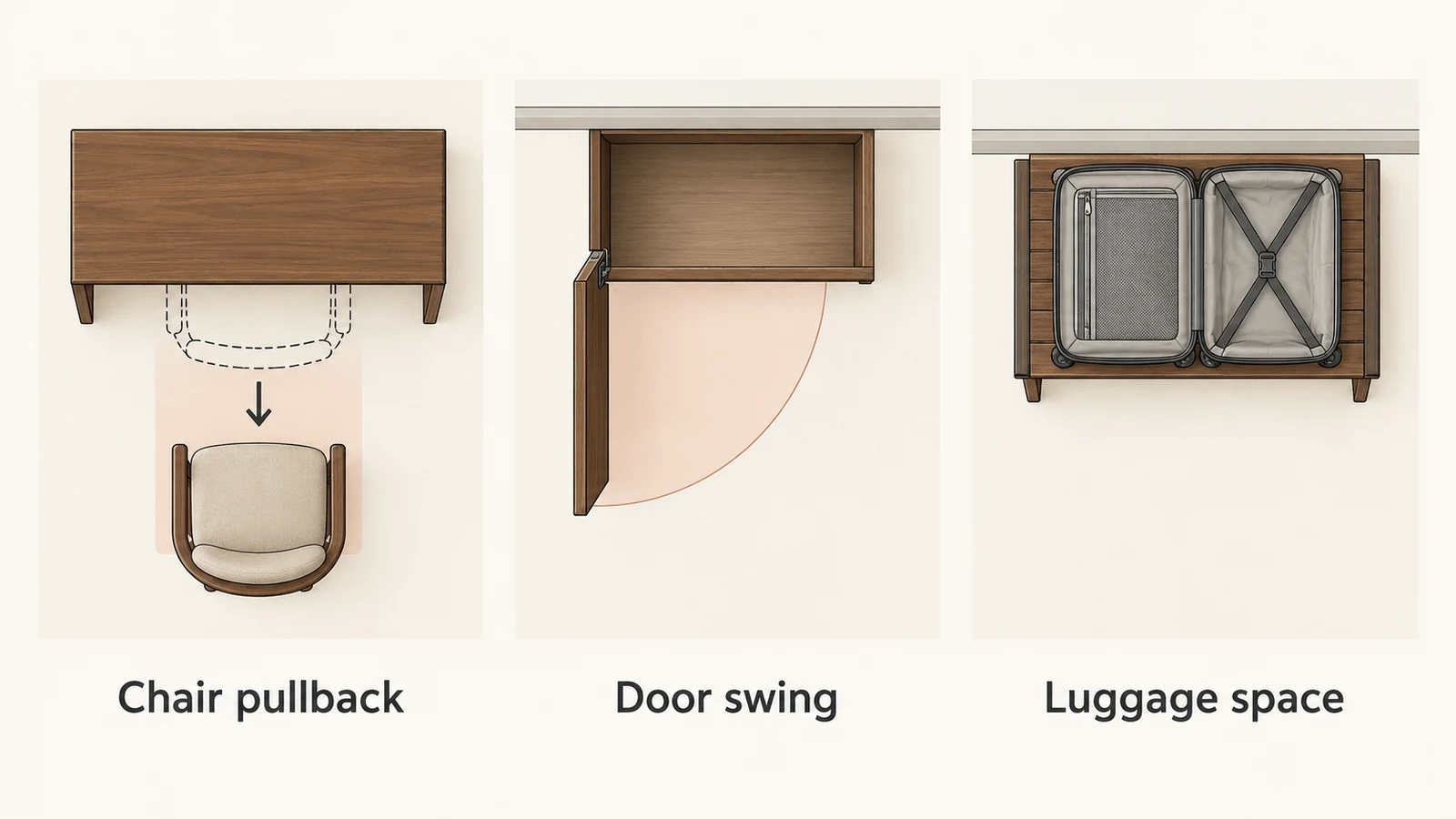
Furniture occupies more space during use than its outline on a plan suggests. Drawers open, chairs pull back and luggage needs somewhere to lie flat. Check these positions before approving the arrangement.
Review each room type separately. A desk that fits in the main room category may obstruct movement in a narrower corner room. Confirm the project's accessibility requirements with the design team; do not assume that one layout or a generic clearance will suit every room.
For an illustrative example, imagine a compact room with a large armchair beside the wardrobe. It looks balanced in the presentation image, but the wardrobe door cannot open fully when a suitcase sits nearby. A narrower chair or a different luggage position may solve the problem. Buying a more expensive version of the original chair would leave the layout unchanged.
Judge comfort through everyday tasks
Try chairs with the tables they will accompany. Sit down, stand up and use the surface as a guest would. Check whether armrests get in the way and whether the furniture remains convenient after the chair is pulled out.
At the bedside, review the bed and mattress height together with the adjacent furniture. Check whether a guest can reach the intended surface comfortably. For lounge furniture, consider how it will be used: a seat suitable for reading may need a different arrangement from one intended for a brief pause while dressing.
Area | Guest activity to test | Question for the room review |
|---|---|---|
Bedside | Put down and retrieve personal items | Is the surface convenient to reach and use |
Desk or table | Work or eat while seated | Do the chair and surface work together |
Storage | Hang clothes and open drawers | Is the storage usable in the actual layout |
Luggage area | Open and unpack a suitcase | Can the guest do this without blocking movement |
If several people try the sample room, record where their experiences differ. Comfort is not established by a photograph or a single person's approval.
Give housekeeping a say in the selection
Ask housekeeping to review access around and beneath the furniture. Can staff reach the areas that need cleaning? Do decorative grooves or closely spaced parts add work? Can the team follow the proposed care instructions with its actual equipment and cleaning products?
Review upholstery use, cleaning and performance information together.
Keep this review practical. The buyer does not need to become a materials specialist, but the supplier should be able to explain how the selected product is used and maintained. If the care routine is unrealistic for the hotel, consider another option before ordering.
Spend on improvements guests can use
When the budget is tight, compare what each proposed upgrade changes. A more comfortable chair, useful storage or a better room layout may deserve priority over an extra decorative piece. The right choice depends on the hotel's brief and the problem being solved.
Ask about replacement components and future ordering at the same time. Find out what product information the hotel will receive and how the supplier handles discontinued finishes or materials. Keep these answers with the furniture specification, so the operations team has more than a photograph to work from later.
Approve the room as a whole before repeating it across the order. Record the furniture selected for each room type, the sample decisions and any unresolved questions. Include housekeeping and maintenance feedback in that final review.
Should every room type use the same furniture?
Not necessarily. Review each room type separately. Furniture that fits the main room category may obstruct movement in a narrower room. Keep the visual direction consistent while checking dimensions, guest activities and the project's accessibility requirements for each layout.
Who should approve the final guestroom furniture?
The project team should approve the room as a whole, with housekeeping and maintenance feedback included. Record the furniture selected for each room type, the sample decisions and any unresolved questions before repeating the arrangement across the order.
Share your guestroom furniture brief with Grandmeca, including layouts, room quantities and the style references you want to explore. Explain how guests will use the rooms, so the discussion starts with both appearance and practical needs.
By Grandmeca


